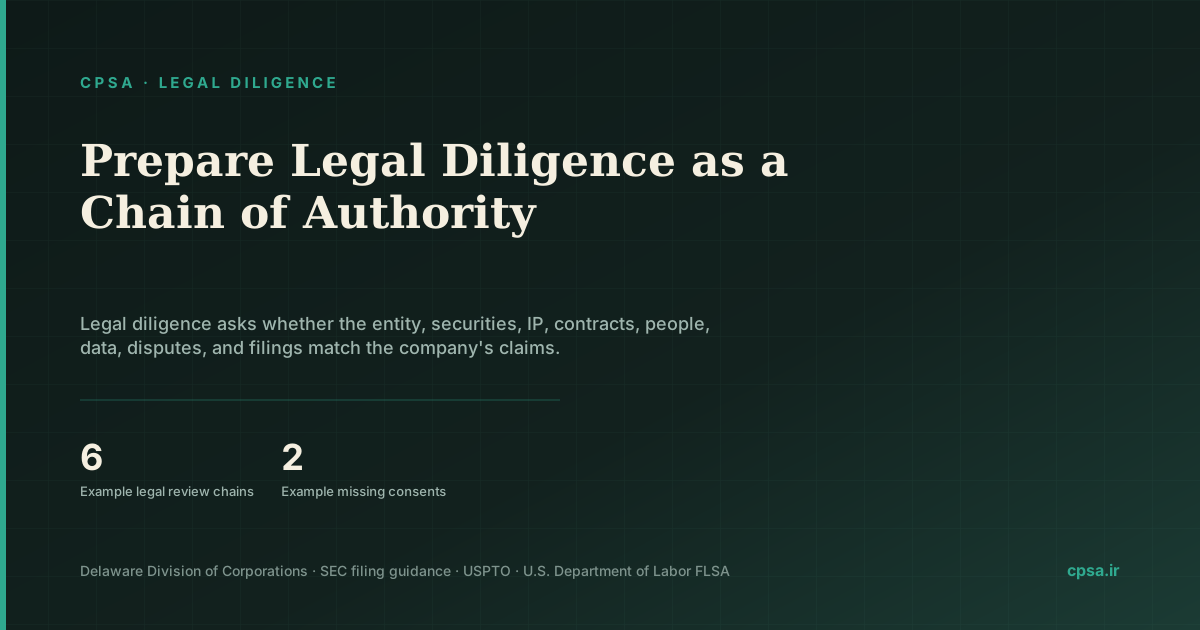
Legal diligence tests chains: the entity exists and is in good standing; the right body approved each security and material contract; creators assigned the IP the product uses; workers and contractors are classified and documented; required licenses and filings are current; and known disputes or compliance failures are disclosed. Prepare those chains before a transaction compresses the calendar.
Prove entity and transaction authority
Collect formation documents, current charter and bylaws, amendments, good-standing evidence where applicable, registers, board and shareholder minutes, written consents, powers of attorney, subsidiaries, foreign qualifications, and beneficial-ownership records required by governing law. Build an approval chain for every financing and material equity grant.
Reconcile authorized, issued, reserved, cancelled, repurchased, and convertible securities to signed instruments and approvals. If a grant lacks authority or a filing is late, do not backdate. Record the exception and have qualified counsel determine ratification, correction, disclosure, and any tax or securities consequences.
Trace contracts, IP, people, and data
For material contracts, extract parties, term, renewal, termination, assignment, change of control, exclusivity, most-favored terms, indemnity, liability caps, governing law, and required consent. Tie the schedule to signed versions and amendments. A sales summary cannot replace the operative agreement.
Map each product component to an employee or contractor assignment, inbound license, open-source obligation, trademark, patent, domain, and repository access record. Separately map worker classification, offer or service terms, compensation, equity promises, confidentiality, investigations, data flows, privacy notices, processors, security incidents, and retention duties.
Worked example: cure without rewriting history
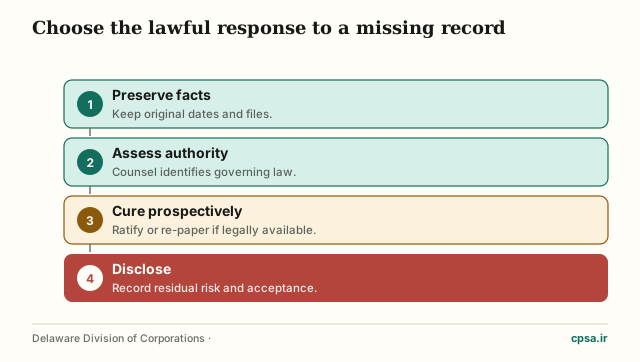
Illustrative example, not a benchmark: review finds two option grants without board consents, one contractor code contribution without an IP assignment, and a privacy notice that omits a current analytics processor. The exception log records the original dates, affected rights, transaction exposure, owner, proposed cure, counsel review, and disclosure status.
Counsel decides whether valid ratification is available, obtains a present-dated assignment with appropriate consideration and warranties, and updates privacy documents and processor records prospectively. The company preserves the audit trail. It never fabricates an earlier signature or silently replaces the historical file.
- Approvals2 count
- IP chain1 count
- Worker files3 count
- Privacy terms4 count
Delaware Division of Corporations (worked example). Illustrative exception inventory; not observed market data.
Make the checklist jurisdiction-specific
Delaware, SEC, USPTO, and US Department of Labor sources answer only their respective US questions. State corporate law, federal and state securities rules, tax, labor classification, privacy, export controls, sanctions, sector licensing, and intellectual-property registration each have different scope. Even within the US, one source does not clear the others.
An Iranian, UAE, EU, UK, or cross-border startup needs counsel in the relevant company, employment, data, IP, sanctions, and transaction jurisdictions. Local rules determine register validity, foreign ownership, exchange control, worker rights, data transfers, privilege, and enforceability. This operating checklist is not legal advice or a substitute for a legal opinion.
Frequently asked questions
What is the first legal diligence file to build?
Build a legal entity and approval index linking current governing documents, registers, consents, and each security.
Can missing approvals be backdated?
No. Preserve facts and ask counsel about present-day ratification, correction, and disclosure.
What makes an IP chain complete?
Every creator and inbound component traces through a valid assignment or license to the company and actual product use.
Does this checklist cover Iranian or UAE law?
No. It is an operating framework. Qualified local counsel must define documents, approvals, filings, and enforceability.
Answers to the questions this topic usually leaves hanging.
How we sourced this
Every statistic in Prepare Legal Diligence as a Chain of Authority is attributed. Where a number is an estimate rather than a census, the note says so.
- Delaware Division of CorporationsOfficial Delaware entity, filing, and status resources.
- SEC filing guidanceOfficial US federal securities filing context.
- USPTOOfficial US patent and trademark records and guidance.
- U.S. Department of Labor FLSAOfficial federal wage-and-hour scope for worker review.
Primary sources used for this edition.
The bottom line
A clean legal room preserves history, proves authority, and names every unresolved exception.
If you want the adjacent decisions after Prepare Legal Diligence as a Chain of Authority, start with Investment diligence, Cap table structure, Term sheet negotiation, Legal structure.